
Why Stearate Sanding Belts Clog on Aluminum: 5 Causes & Solutions
Wondering why stearate sanding belts clog on aluminum even with anti-clogging coating? This advanced diagnosis explains the root cause of aluminum grinding loading and provides actionable solutions for industrial production lines to extend belt life.
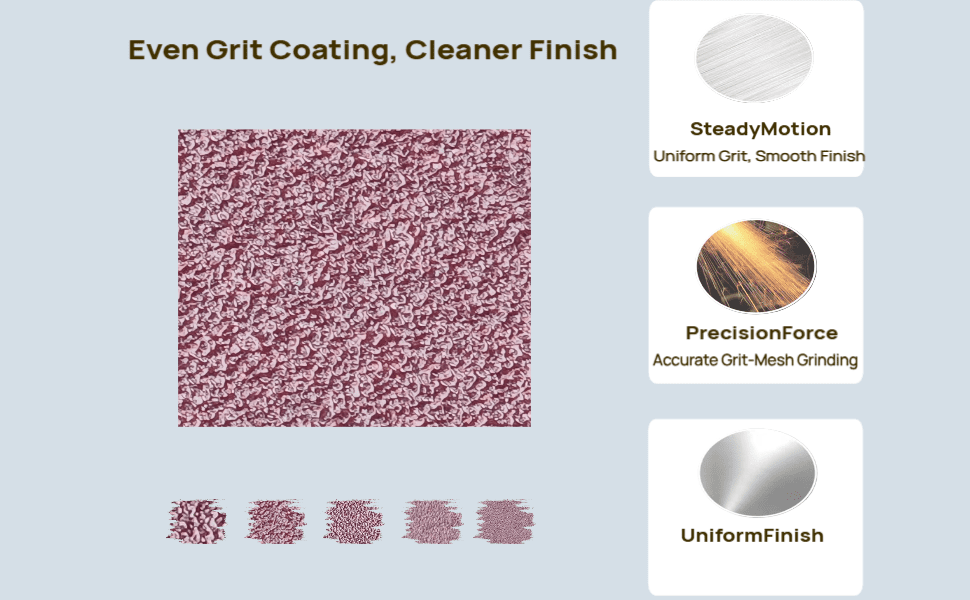
Aluminum is notorious in the abrasive industry for its “gumming” characteristics. While stearate-coated sanding belts (anti-clogging belts) are designed to solve this, many high-volume production lines still face premature clogging (loading).
When the metal “welds” itself to the abrasive grain despite the anti-friction coating, it’s rarely a product defect—it’s a failure of thermodynamic and chemical balance.
5 Technical Reasons Why Stearate Sanding Belts Clog on Aluminum
Stearate acts as a dry lubricant to reduce friction and surface tension. However, its effectiveness is governed by specific physical limits that lead to sanding belt loading:
- 1. Exceeding the Melting Point: Most industrial zinc stearates melt between 100°C – 130°C. High-pressure grinding flash-heats the interface to over 400°C, liquefying the lubricant instantly.
- 2. Insufficient SFPM (Surface Speed): Slow belt speeds fail to generate enough centrifugal force to “flick” aluminum chips away before they bond.
- 3. Closed-Coat Geometry: Using a 100% grain coverage belt leaves no “valleys” for aluminum chips to reside in, causing rapid surface clogging.
- 4. Thermal-Moisture Synergism: In humid environments, the cloth backing absorbs moisture which increases friction heat, accelerating the breakdown of the anti-clogging layer.
- 5. Micro-welding of 5000-series Alloys: High magnesium content in certain aluminum alloys promotes direct bonding to the abrasive grain surface under intense pressure.
Industry Technical Data Reference
According to metallurgical research by 3M Abrasive Systems and Norton (Saint-Gobain):
- Critical Failure Zone: Interface temperatures exceeding the stearate’s melting point cause the lubricant to be flung off the belt, exposing raw abrasive grain to molten aluminum.
- Data Source: 3M Technical Whitepaper: Overcoming Loading in Soft Metal Grinding
Solutions to Prevent Stearate Sanding Belts Clogging on Aluminum
Scenario A: Edge Clogging on Large Aluminum Plates
Reason: Excessive localized heat build-up due to slow feed rates or prolonged dwell time in one contact area.
Actionable Fixes:
- Increase Belt Speed (SFPM): Adjusting SFPM to 5,000–7,000 helps eject aluminum chips before they have a chance to thermally bond.
- Lubrication Synergy: Use a Sanding Lubricant Stick (Wax) as a secondary thermal buffer to protect the primary stearate layer from premature melting.
Scenario B: “Glazing” of the Abrasive Surface
Reason: Using a Closed Coat belt on soft 1000 or 3000 series aluminum, which offers zero clearance for chip evacuation.
Actionable Fixes:
- Switch to Open Coat: Ensure your belt has an Open Coat (50%-70% grain coverage) to provide physical “valleys” for metal waste.
- Air Knife Systems: Install high-pressure air jets on the return side of the belt to mechanically blow out aluminum dust before it re-enters the grind zone.
Industrial FAQ: Solving Aluminum Loading Issues
Q1: Is Zinc Stearate or Calcium Stearate better for aluminum?
A: Zinc Stearate is the industry standard for dry sanding due to its superior “slip” coefficient. However, always verify paint-compatibility with your coating department to avoid “fish-eyes.”
Q2: Why does my belt clog faster on 5000-series aluminum?
A: Higher magnesium content increases “micro-welding” risks. For these tougher alloys, a Ceramic abrasive grain with a Top-size Grinding Aid is significantly more effective than standard stearate.
Q3: Can I “clean” a clogged aluminum belt?
A: Mechanical cleaning (Crepe sticks) works only for surface-level loading. If “Glazing” has occurred, the resin bond is likely compromised. Prevention is the only industrial-scale solution.
Formal Industry References & Compliance
This technical diagnosis follows established global metalworking protocols:
- FEPA: Standard for Coated Abrasives on Non-Ferrous Metals. fepa-abrasives.org
- ASM International: Surface Engineering of Aluminum Alloys. asminternational.org
- UAMA: Technical Bulletin on Anti-Loading Coatings for Abrasives.
Expert Recommendation: For high-volume aluminum production, sanding.shop recommends our Ultra-Open Coat Stearated Series. By combining high-porosity backing with premium Zinc Stearate, we solve the core reasons why stearate sanding belts clog on aluminum.