
Sanding Belt Tracking Issues: Why Belts Wander Under Pressure & Solutions
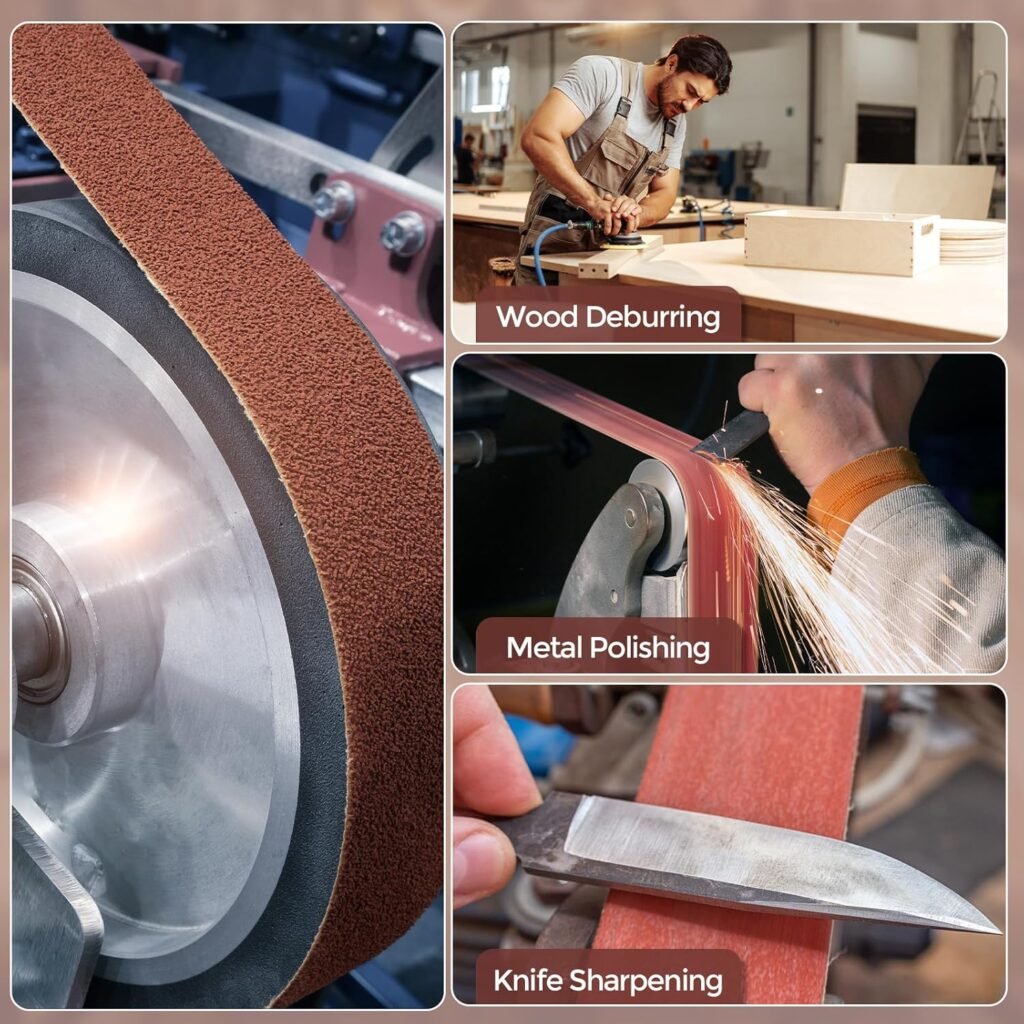 One of the most frustrating sanding belt tracking issues occurs when the belt stays perfectly centered during idling (static tracking) but immediately wanders or “walks” once the grinding pressure is applied. This technical diagnosis explains the physical mechanics behind dynamic tracking failure and provides industrial solutions to prevent costly downtime.
In wide-belt sanding, tracking is maintained by a pneumatic sensing system and a pivoting tracking roller. However, when the belt drifts only during work, the problem isn’t usually the sensors—it’s a breakdown of the parallelism and frictional balance under load.
| Issue Type | Symptom | Primary Root Cause |
|---|---|---|
| Static Tracking | Belt wanders while idling | Sensor misalignment |
| Dynamic Tracking | Belt wanders under pressure | Parallelism or tension failure |
The Technical Causes of Sanding Belt Tracking Issues Under Pressure
When a wide belt sander operates, it relies on a delicate balance of tension. Static tracking assumes an even load, but dynamic tracking issues arise due to three primary physical factors:
- Differential Belt Stretch (Elastic Modulus): According to 3M Abrasive Technical Bulletins, if the belt has absorbed uneven moisture, one edge may have a slightly lower tensile modulus. Under high grinding pressure, the “softer” side stretches more, effectively changing the belt’s geometry into a conical shape, which naturally pulls toward the side with less tension.
- Component Deflection (Machine Rigidity): Research by Timesavers Inc. suggests that if the contact roller or idler pulley bearings are worn, the force of the workpiece can cause “micro-deflection.” A deviation of even 0.010 inches is enough to overcome the pneumatic tracking system’s ability to compensate.
- Asymmetrical Frictional Heat: Excessive stock removal on one side of the conveyor increases localized heat. Heat expands the rubber on the contact drum, creating a slightly larger diameter on one side (the “crowning” effect), forcing the belt to steer toward the expanded side.
Industry Technical Data Reference
Data from the UAMA (United Abrasives Manufacturers Association) highlights that 85% of tracking failures under pressure are caused by improper tensioning or worn friction-strip components on the tracking cylinder.
- Recommended Tension: For polyester-backed belts, a tension of 45-65 PSI is mandatory to maintain tracking stability under heavy load.
- Data Source: UAMA Technical Guide: Coated Abrasive Belt Tracking
Actionable Solutions for Sanding Belt Tracking Issues
Troubleshooting Checklist: Sanding Belt Tracking Issues
| Symptom | Most Likely Cause | Quick Fix |
|---|---|---|
| Belt wanders only under pressure | Loss of parallelism or uneven tension | Check conveyor & roller alignment |
| Belt hunts back and forth | Dirty sensors or worn ceramic tips | Clean sensors & inspect tracking edges |
| Belt drifts to one side | Tapered contact roller or uneven stretch | Replace worn roller & use quality belts |
| Drifts after 20–30 minutes | Heat-induced deflection | Verify proper belt tension & storage |
Scenario A: Belt Drifts to One Side When Sanding Thick Panels
Diagnosis: This indicates Conveyor Bed Non-Parallelism. If the conveyor table is not perfectly parallel to the contact roller, the pressure distribution is uneven.
Solutions:
- Check Parallelism: Use a dial indicator to ensure the contact drum is parallel to the conveyor bed within ±0.002 inches.
- Calibrate Pressure: Reduce the down-pressure (pinch roll pressure) and rely more on the abrasive’s cutting ability than mechanical force.
Scenario B: Belt “Hunts” Rapidly Back and Forth Under Load
Diagnosis: This is often caused by Contaminated Photo-Eye Sensors or a slow pneumatic response time.
Solutions:
- Clean Sensing Eyes: Dust can bridge the infrared signal. Use clean, dry compressed air to clear the sensors every 4 hours of operation.
- Inspect Tracking Ceramic Tips: Ensure the ceramic edge-sensors aren’t grooved. Grooved sensors delay the signal, causing the “hunting” effect.
FAQ: Troubleshooting Wide Belt Tracking Problems
Q1: Why does my belt track fine at the start but wander after 30 minutes?
A: This is likely Heat-Induced Deflection. As the belt and rollers heat up, any internal stress in the belt’s splice or uneven wear in the drum’s rubber coating becomes magnified, leading to tracking drift.
Q2: Can a worn contact roller cause tracking issues?
A: Yes. If the rubber on the contact roller is “tapered” (worn more on one side), the belt will always steer toward the smaller diameter side, regardless of sensor input.
Q3: Does belt storage affect tracking?
A: Absolutely. According to FEPA standards, belts should be hung for at least 24 hours before use to allow fibers to stabilize. Belts stored on concrete floors will absorb moisture unevenly, causing permanent tracking issues.
Formal Industry References & Compliance
This technical guide adheres to international machinery and abrasive safety standards:
- FEPA: Safety Requirements for the Use of Abrasive Belts. fepa-abrasives.org
- ANSI B7.1: Safety Requirements for the Use, Care, and Protection of Abrasive Wheels and Belts.
- WMIA: Woodworking Machinery Industry Association Maintenance Protocols.
Expert Recommendation: To eliminate sanding belt tracking issues caused by inconsistent belt geometry, sanding.shop provides precision-slit Wide Sanding Belts with reinforced, heat-stable joints. Our belts are engineered to maintain dimensional stability even under extreme industrial pressure.