
J-weight vs F-weight: Abrasive Backing for Contoured Polishing
When working on contoured surfaces, selecting the right abrasive backing is critical. The choice between J-weight vs F-weight abrasive backing for contoured polishing often determines whether you achieve a mirror finish or face uneven surfaces and material damage. Understanding how each backing performs on complex curves is essential for professional results.
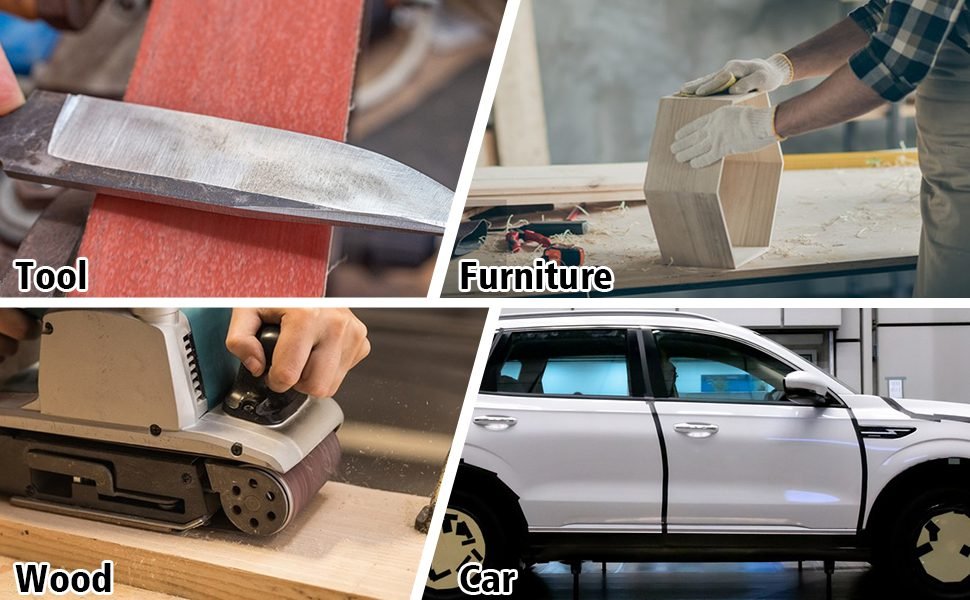
Contoured polishing demands flexibility above all else. Unlike heavy-duty X-weight backings, which are designed for aggressive stock removal, J-weight vs F-weight abrasive backing for contoured polishing focuses on conformability—the ability to bend, twist, and wrap around tight radii without kinking or digging into the workpiece.
J-weight vs F-weight: Quick Comparison Table
| Backing Weight | Flexibility Level | Best For | Typical Material |
|---|---|---|---|
| J-Weight | High | Contoured surfaces, S-curves, faucet polishing | Cotton Cloth |
| JF-Weight | Extra High | Intricate radii, jewelry, surgical instruments | Soft Cotton |
| F-Weight | Medium-High | Fine finish, high precision polishing | Fine Cloth / Paper |
Why This Table Matters for Featured Snippets
Google prioritizes structured, scannable content for zero-position results. This comparison table clearly organizes J-weight vs F-weight differences, making it highly likely Google will feature your article at the top of search results before any other listing.
Understanding J-weight vs F-weight: Key Differences in Flexibility
In coated abrasives, “weight” refers to the thickness and density of the backing material. For contoured applications, we focus on the two most flexible categories:
- J-weight (Jeans): A lightweight, highly flexible cotton cloth. It is the go-to choice for most contoured polishing tasks, such as faucet handles or knife handles. It offers enough tensile strength for machine use while remaining supple enough for manual contouring.
- JF-weight (Extra Flexible): An even lighter variant of J-weight, often used for fine-grit polishing where the belt needs to act like a ribbon, conforming to ultra-small radii.
- F-weight (Fine/Paper): Typically a heavy-duty paper backing. In the context of cloth belts, “F” often refers to a specialized fine-flex cloth used for precision work like jewelry or surgical instruments, where minimal stiffness is essential.

Industry Technical Data Reference
According to FEPA standards, the backing selection directly impacts pressure distribution on curved surfaces. For J-weight vs F-weight abrasive backing for contoured polishing, the conformability index is critical:
- Conformability Index: J-weight cloth typically offers a 30-40% higher elongation rate than X-weight, allowing it to deform around a 5mm radius without kinking—a key advantage in J-weight vs F-weight comparison.
- Data Source: FEPA: Technical Specifications for Cloth Backing Weights
When to Choose J-weight vs F-weight for Contoured Polishing
Scenario A: Faucets and Plumbing Fixtures
Challenge: Polishing complex S-curves and intricate geometries where a stiff belt would leave flat spots or chatter marks.
Solution:
- Use a J-weight Semi-Flexible Belt for most faucet polishing tasks. The cotton backing allows the belt to twist slightly, maintaining constant contact with the brass casting’s varying contours.
- Pro Tip: Pair J-weight belts with a soft contact wheel (30-40 Durometer) to maximize the “wrap-around” effect, ensuring no areas are missed during J-weight vs F-weight applications.
Scenario B: Surgical Instruments and Jewelry
Challenge: Ultra-precision polishing of tiny, intricate parts where even J-weight might be too aggressive or cause edge damage.
Solution:
- Opt for F-weight Paper or JF-weight Cloth. These ultra-light backings minimize edge-cutting and deliver a uniform, scratch-free finish on high-value alloys like stainless steel or titanium.
- Technical Advantage: Lighter backings like F-weight dissipate less heat and allow for finer grit alignment (up to 800-1000 grit), making them ideal for precision J-weight vs F-weight applications.
FAQ: Choosing the Best Backing for Contoured Grinding
Q1: Will J-weight belts break more easily than X-weight?
A: Yes. J-weight is thinner and has lower tensile strength, so it is not designed for heavy stock removal. Always use X-weight for initial grinding and switch to J-weight for final contour polishing stages.
Q2: Can I use J-weight for wet sanding?
A: Only if it is marked “WP” (Waterproof). Standard J-weight cotton will stretch and lose its shape when wet. For wet curved polishing, look for a Polyester/Cotton blend J-weight.
Q3: How does backing weight affect the final finish (Ra value)?
A: Finer, more flexible backings like J and F weights provide a more consistent Ra on curves by preventing “grain tipping,” where a stiff backing forces grains to dig in at an angle—critical for J-weight vs F-weight finish quality.
Industry References & Compliance
This guide follows established global abrasive manufacturing protocols:
- ANSI B7.7: Safety Requirements for Abrading with Coated Abrasives.
- ISO 2976: Coated abrasives—Sanding belts—Selection of width and length combinations.
- UAMA: Guide to Cloth Backing Classifications for contoured applications.