
sanding belt bursting in humid summer: Causes & Industrial Solutions | HONGXIN
This technical guide explains why sanding belt bursting in humid summer occurs, and provides industrial solutions to prevent joint failure in heavy-duty grinding.
Executive 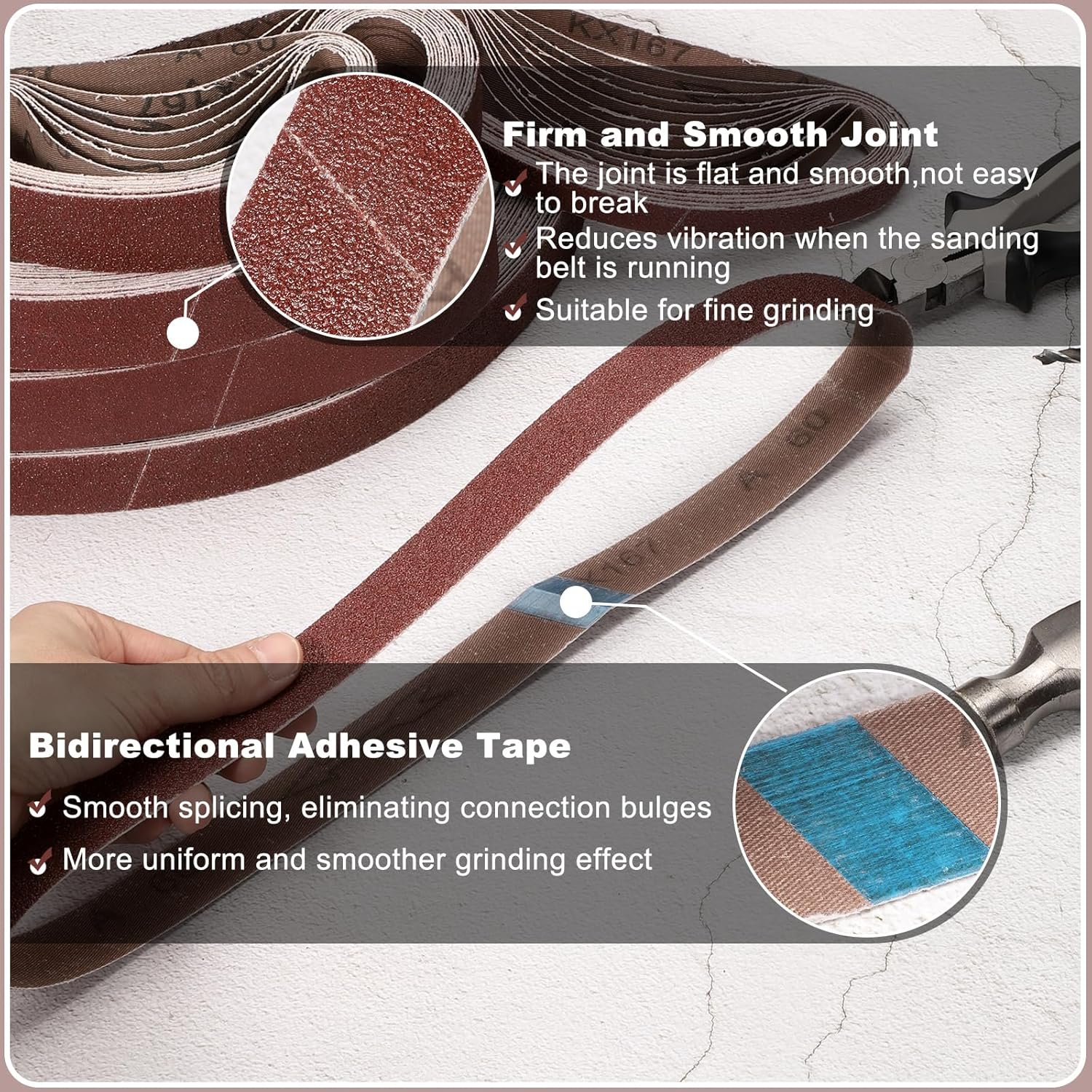 Summary for Maintenance Managers
Abrasive belt “bursting” in summer is primarily caused by hygroscopic expansion of cloth backings and the hydrolysis of resin bonds. Maintaining a storage environment of 45%-55% RH and performing a 15-minute idle warm-up can reduce sanding belt joint failure by up to 25%.
1. Technical Analysis: The Impact of Humidity on Abrasive Integrity
The following table defines the mechanical degradation of heavy-duty sanding belts under high humidity, compiled from industry-leading technical data.
| Environmental Variable | Technical Metric | Physical Impact | Degradation Rate |
|---|---|---|---|
| High Humidity (>75% RH) | Peel Strength | Resin bond hydrolysis at the joint | 15% – 25% Reduction |
| Moisture Absorption | Dimensional Stability | Fiber swelling in X/Y-weight cloth | 0.5% – 1.2% Expansion |
| Thermal Load | Tensile Modulus | Reduced heat dissipation in damp belts | Accelerated Joint Fatigue |
Reference: Compiled from Saint-Gobain (Norton) & FEPA Safety Standards (2024-2026).
2. Troubleshooting Joint Failure: Scenario-Based Solutions
Scenario A: Belt Breakage During Morning Startup
Root Cause: Hygroscopic Equilibrium. Belts absorb ambient moisture overnight, leading to localized stiffness at the joint tape — a major cause of sanding belt bursting in humid summer.
Solutions:
- The 15-Minute Warm-up Rule: Tension the belt and run it idle for 15 minutes before loading. Frictional heat drives out moisture, restoring the tensile modulus of the polyester backing.
- Humidity Control: Deploy industrial dehumidifiers to maintain RH between 45%-55%. This prevents sanding belt peel strength loss and early joint failure.
Scenario B: Sudden Bursting During Heavy-Duty Stock Removal
Root Cause: Thermal-Moisture Synergism. Grinding heat creates internal steam pressure within saturated fibers, causing “explosive” delamination in heavy-duty sanding belts.
Solutions:
- Pneumatic Tension Adjustment: Reduce tension by 5%–10% in humid conditions to compensate for altered elasticity in damp cloth.
- Coolant pH Management: Maintain a neutral pH (7.0-8.5) to prevent chemical acceleration of resin breakdown.
3. Industrial FAQ: Common Abrasive Maintenance Questions
Q: Why do paper-backed belts fail faster than cloth-backed belts in humidity?
A: Paper fibers are highly porous and lack synthetic stabilization. For humid industrial grinding, waterproof polyester cloth-backed belts are mandatory to prevent catastrophic sanding belt bursting in humid summer.
Q: What is the FEPA-standard method for belt storage?
A: Per FEPA, belts must be suspended on non-metallic cylindrical pegs (minimum 100mm diameter) at least 20cm above the floor to ensure airflow and prevent “wavy edge” distortion — a key part of FEPA sanding belt storage best practices.
Q: How can I tell if a joint break is due to humidity or mechanical overload?
A:
- Adhesive Failure (Humidity): A clean separation at the tape/glue line, directly causing sanding belt joint failure.
- Mechanical Failure (Overload): A ragged, “saw-tooth” tear through the backing material.
4. Formal Industry References & Compliance
This technical guide follows international abrasive safety standards used by maintenance managers and industrial operators worldwide:
- FEPA Safety Code: Standards for safe use of coated abrasives.
- ANSI B74.18: Standard for abrasive storage and handling.
- UAMA Technical Bulletin: Resin bond durability analysis in extreme climates.
For operations in extreme high-humidity environments, sanding.shop provides custom heavy-duty sanding belts with anti-moisture resin and reinforced butt joints. Contact our technical team for a reliable solution to avoid sanding belt bursting in humid summer.
For industrial maintenance teams, understanding sanding belt bursting in humid summer is critical to reducing unexpected downtime and improving production stability. High humidity not only weakens joint adhesion but also changes the physical behavior of the backing material, leading to inconsistent performance even with premium abrasive belts. By implementing proper storage conditions, pre-operation warm-up procedures, and adjusted machine settings, manufacturers can significantly reduce failure rates and maintain consistent grinding quality throughout the summer months. Regular inspection of belt joints, contact wheel conditions, and environmental humidity levels further supports long-term belt reliability and reduces the total cost of abrasive consumption in heavy-duty operations.